For more than a decade, small displacement turbocharged engines were widely adopted as a solution to tightening emissions regulations and fuel-economy targets. By combining a compact engine with forced induction, automakers could deliver acceptable performance while reducing laboratory-measured emissions. However, by 2026, several global markets are seeing these engines reduced in availability or removed entirely from product lineups. This shift is driven by a combination of regulatory, technical, economic, and durability factors rather than a single policy decision.
The Original Purpose of Downsizing
Small turbo engines emerged as a response to emissions standards that taxed vehicles based on displacement and laboratory fuel consumption. Under controlled testing cycles, downsized engines performed efficiently because:
- Turbo boost was rarely required
- Acceleration demands were modest
- Engine load remained low
In these conditions, a 1.0- to 1.5-liter turbocharged engine could outperform a larger naturally aspirated engine on paper, helping manufacturers meet fleet-average targets.
Real-World Emissions and Consumption
As emissions testing shifted from laboratory cycles to real-world driving conditions, the weaknesses of small turbo engines became evident. In everyday use, these engines:
- Operate under boost more frequently
- Consume more fuel during sustained highway driving
- Generate higher particulate emissions
Real-world testing revealed that under load, small turbo engines often consumed as much fuel—or more—than larger engines operating at lower stress levels. This narrowed or eliminated the efficiency advantage that downsizing promised.
Thermal Load and Mechanical Stress
Downsized turbocharged engines operate at higher internal pressures and temperatures than larger naturally aspirated engines. This results in:
- Increased piston and ring wear
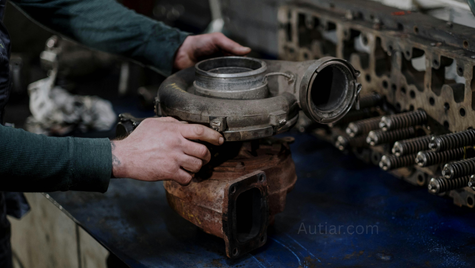
- Higher stress on turbochargers
- Greater cooling system demands
Over time, this can affect durability, particularly in markets with:
- High ambient temperatures
- Heavy traffic congestion
- Long highway driving cycles
Manufacturers have reported increased warranty claims related to turbochargers, cooling systems, and particulate filters in certain regions.
Emissions Compliance Costs
Meeting modern emissions standards requires significantly more hardware than before. Small turbo engines now often need:
- Gasoline particulate filters
- Advanced exhaust after-treatment
- More complex engine management systems
These additions increase cost, weight, and complexity, reducing the original economic advantage of engine downsizing. In some cases, the cost of making a small turbo engine compliant approaches that of a larger engine or a hybrid system.
Market-Specific Challenges
The viability of small turbo engines varies by market. In regions with:
- High-speed motorway driving
- Heavy vehicle loads
- Extreme temperatures
Small turbo engines struggle to deliver consistent efficiency and durability. As a result, manufacturers have selectively removed these engines from markets where real-world performance does not align with regulatory expectations.
Shift Toward Hybridization
In many cases, manufacturers found that pairing a larger naturally aspirated engine with hybrid assistance delivers:
- More consistent real-world fuel economy
- Lower emissions across varied driving conditions
- Reduced mechanical stress
Hybrid systems allow engines to operate closer to optimal efficiency points, reducing reliance on forced induction. This has made hybrids a more reliable compliance strategy than aggressive downsizing.
Explore More: 2026 Yamaha YZF-R7 Unveiled with Advanced Features & Upgrades
Customer Perception and Ownership Experience
Consumer expectations have also shifted. Many buyers reported:
- Higher-than-expected fuel consumption
- Reduced drivability under load
- Increased maintenance complexity
As transparency around real-world fuel economy improved, dissatisfaction with downsized turbo engines increased in certain segments.
Engines Are Not Disappearing Entirely
It is important to note that small turbo engines are not being eliminated globally. They remain viable in:
- Lightweight vehicles
- Mild-hybrid applications
- Markets with lower sustained driving loads
However, their role is becoming more limited and targeted rather than universal.
Check This: MINI Countryman SE All4 Debuts in India with AWD and 440km Range
Conclusion
Small turbocharged engines were an effective short-term solution to regulatory pressure, but evolving emissions testing, durability concerns, and rising compliance costs have exposed their limitations. In some markets, they are being replaced by hybrid systems or simpler engine configurations that deliver more consistent real-world performance. The shift reflects a broader move toward solutions that balance efficiency, durability, and regulatory compliance rather than optimizing for laboratory results alone.