Modern vehicles are more powerful, more efficient, and more capable than ever, yet many drivers and enthusiasts sense that something is constrained. Acceleration may feel strong but controlled, throttle response measured rather than raw, and top-end performance capped well below what hardware appears capable of delivering. This is not accidental. By 2026, software plays a central role in limiting vehicle performance, often more decisively than mechanical components. These limits exist for regulatory, durability, safety, and business reasons—and they fundamentally reshape how modern cars behave.
Software Has Replaced Mechanical Limits
In older vehicles, performance limits were imposed mechanically. Engine airflow, fuel delivery, ignition timing, and gearing physically constrained output. If an engine could breathe more air or rev higher, it generally did.
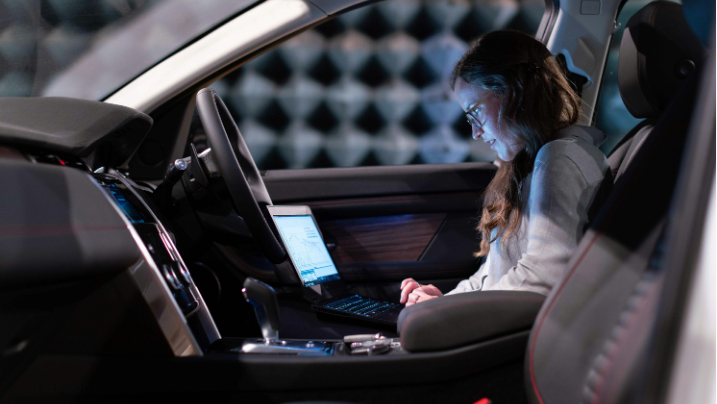
Modern engines are governed by engine control units (ECUs) that manage every aspect of operation. Power delivery is no longer dictated solely by hardware capability but by algorithms that decide:
- How much torque is allowed at a given moment
- How quickly throttle response ramps
- When boost pressure is reduced
- How aggressively the engine can rev
As a result, two vehicles with identical hardware can behave very differently depending on software calibration.
Torque Is Often Artificially Capped
Most modern engines are capable of producing more torque than they are allowed to deliver. Software-imposed torque limits are used to:
- Protect transmissions and driveline components
- Maintain reliability across varied usage
- Reduce stress during low-speed operation
This is especially common in turbocharged engines, where boost pressure is modulated not by physical limits but by software-defined torque targets. Even full throttle does not always mean full engine output.
Throttle Response Is Heavily Filtered
Electronic throttle systems allow manufacturers to reshape how acceleration feels. Pedal input is interpreted rather than obeyed directly.
Software often:
- Softens initial throttle response to reduce emissions spikes
- Limits torque during gear changes
- Dampens sudden acceleration to improve traction and comfort
While this makes vehicles smoother and easier to control, it also removes immediacy. The engine may be capable of responding faster, but software deliberately slows the response.
Emissions Compliance Drives Performance Limits
Modern emissions regulations do not evaluate engines solely at steady-state operation. They assess transient behavior—how engines respond to sudden throttle inputs, load changes, and temperature variations.
Rapid spikes in torque or boost increase:
- Particulate emissions
- Nitrogen oxide output
- Thermal stress
To meet compliance targets, software smooths power delivery and limits aggressive behavior, especially when the engine or exhaust system is cold.
Thermal Management Is Software-Controlled
Performance is also limited by thermal considerations. Modern vehicles continuously monitor:
- Coolant temperature
- Oil temperature
- Intake air temperature
- Exhaust system heat
If thresholds are approached, software intervenes by:
- Reducing boost
- Retarding ignition timing
- Limiting engine speed
These interventions are often invisible to the driver, yet they significantly shape how consistently performance is delivered.
Gearboxes Are Protected by Code
Transmissions are among the most expensive components in modern vehicles. To ensure longevity across millions of users, software restricts torque based on:
- Selected gear
- Vehicle speed
- Drivetrain temperature
This is why many vehicles deliver full torque only in higher gears or under specific conditions. In lower gears, output may be intentionally limited even at full throttle.
Market Segmentation Is Enforced Digitally
Software allows manufacturers to create multiple performance tiers from identical hardware. Lower trims may have:
- Reduced power output
- Softer throttle maps
- Earlier torque limits
This protects higher-performance models and simplifies manufacturing. Hardware differences are minimized; differentiation happens through calibration.
Explore More: 2026 Yamaha YZF-R7 Unveiled with Advanced Features & Upgrades
Driver Modes Change Software Behavior
Drive modes are software profiles, not mechanical transformations. Switching from Eco to Sport may:
- Increase throttle sensitivity
- Raise torque limits
- Allow higher revs
- Reduce intervention from stability systems
The engine does not suddenly gain capability—it is simply allowed to use more of what it already has.
Why Manufacturers Prefer Software Limits
From a manufacturer’s perspective, software limits provide:
- Regulatory compliance flexibility
- Reduced warranty claims
- Simplified global production
- Controlled performance variability
Vehicles must perform acceptably in extreme climates, poor fuel quality, and abusive driving conditions. Software ensures consistency across these scenarios.
What This Means for Drivers
Modern cars are rarely operating at their true mechanical limits. Instead, they operate within software-defined envelopes designed to balance performance, durability, and compliance.
This explains why:
- Vehicles feel fast but restrained
- Performance fades under sustained use
- Minor software updates can alter behavior noticeably
Check This: MINI Countryman SE All4 Debuts in India with AWD and 440km Range
Conclusion
Software has become the dominant factor shaping vehicle performance. While modern cars possess impressive mechanical capability, much of it is deliberately held in reserve. These limits are not signs of weakness, but strategic decisions driven by regulation, reliability, and market structure. Understanding this shift explains why modern vehicles feel controlled rather than raw—and why performance today is defined as much by code as by hardware.