At Autiar, we’ve lost count of how many spec sheets brag about peak horsepower while quietly burying the transmission data. That omission tells you everything you need to know. Horsepower sells cars on paper. Gear ratios make them feel fast—or frustrating—every single day.
Our team has driven enough high-horsepower cars that feel sluggish and modestly powered ones that feel alive to know the truth: in real-world driving, gearing matters more than headline output. And once you understand why, you’ll never look at a brochure the same way again.
Peak Horsepower Is a Marketing Number—Acceleration Is a System
Horsepower is measured at the crank, at a specific RPM, under ideal conditions. You almost never drive there. What you feel instead is wheel torque, shaped by gear ratios, final drive, and shift logic.
Two cars with identical power can feel wildly different depending on gearing.
A classic example we’ve tested back-to-back:
- Toyota GR86 (228 hp, short gearing)
- Subaru WRX (271 hp, taller gearing)
On paper, the WRX should walk away. In traffic and on back roads, the GR86 often feels quicker because:
- Shorter 1st–3rd gear ratios
- Higher effective torque multiplication
- Less reliance on boost buildup
Takeaway: Horsepower defines potential. Gear ratios decide how often—and how easily—you access it.
Torque Curves Don’t Matter If You’re Never in the Right Gear
Manufacturers love publishing torque curves. What they don’t highlight is how often the transmission keeps you outside that sweet spot.
We’ve logged seat time in:
- BMW M340i (382 hp, ZF 8-speed)
- Audi S4 (349 hp, ZF 8-speed with different calibration)
Same gearbox family. Very different feel.
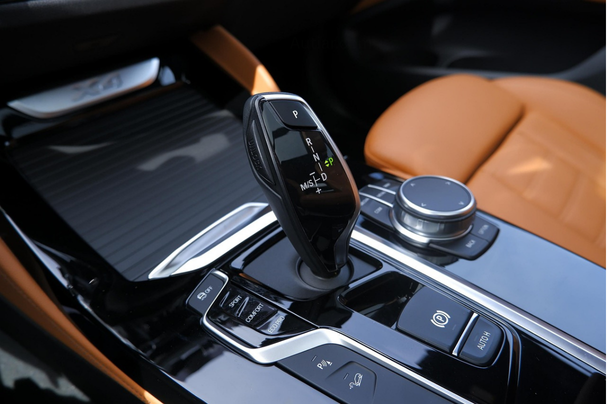
BMW’s advantage isn’t power—it’s gearing and software:
- Shorter lower gear ratios
- More aggressive downshift logic
- Faster torque converter lockup
Audi’s taller gearing makes the car calmer, but also duller off the line and in rolling acceleration.
Takeaway: A great torque curve is meaningless if the transmission refuses to put the engine where it works best.
Why Short Gearing Makes Slow Cars Fun—and Fast Cars Frustrating
Short gearing amplifies acceleration but comes with tradeoffs. Our team sees this clearly when comparing hot hatches.
Consider:
- Honda Civic Type R (FL5)
- Volkswagen Golf R (Mk8)
The Type R has less power but:
- Extremely short 2nd and 3rd gears
- Close ratio spacing
- Aggressive rev-matching logic
The Golf R relies on AWD and power, but taller gearing dulls engagement unless you’re deep into boost.
On a twisty road, the Honda feels urgent at sane speeds. The VW feels fast only when you’re already going too fast.
Takeaway: Short gearing creates engagement. Tall gearing creates numbers—and often boredom.
Check This: Why Modern Cars Feel Faster Than Older Cars With More Horsepower
Automatic Transmissions Changed the Game—And Not Always for the Better
Modern automatics have more gears than ever. In theory, that should help. In practice, ratio spread matters more than gear count.
We’ve tested:
- 10-speed automatics with huge ratio gaps
- 6-speed manuals with perfectly spaced gears
Problems we see with multi-gear automatics:
- Excessively tall top gears for fuel economy
- Overlapping ratios that feel redundant
- Shift hesitation due to emissions-driven logic
A standout counterexample is the Mazda 6-speed automatic, which uses fewer gears but:
- Tight ratio spacing
- Minimal torque converter slip
- Predictable downshifts
Takeaway: More gears don’t mean better acceleration. Smart spacing beats sheer quantity every time.
Final Drive Ratios: The Hidden Multiplier Nobody Talks About
Final drive ratios rarely make headlines, but they’re critical. Change nothing else and shorten the final drive, and the car feels transformed.
We’ve seen this firsthand with:
- Ford Mustang GT (manual) vs earlier model years
- Later cars gained shorter finals to compensate for weight gain
Effects of shorter final drive:
- Faster throttle response
- Higher cruise RPM (and noise)
- Better mid-range punch
It’s also why some EVs feel explosively quick despite modest power—they use aggressive fixed reduction ratios.
Takeaway: Final drive ratios quietly define how eager or lazy a car feels, regardless of horsepower.
EVs Prove the Point—Horsepower Is Almost Irrelevant
If you want proof that gearing beats horsepower, drive an EV.
Most EVs use:
- A single-speed reduction gear
- Massive torque multiplication at the wheels
- Zero shift delays
That’s why a 300-hp EV can embarrass a 450-hp ICE car off the line. The torque is instantly accessible because the gearing is optimized for it.
But there’s a downside:
- Acceleration tapers off at higher speeds
- No ratio changes to keep the motor in peak output
Takeaway: EVs expose the truth—power delivery matters more than peak output, and gearing controls delivery.
Check This: MINI Countryman SE All4 Debuts in India with AWD and 440km Range
The Autiar Verdict
The Commuter
Buy: Cars with smart automatics and moderate gearing. Smooth delivery beats big numbers in traffic.
The Enthusiast
Buy: Short-geared manuals or well-calibrated dual-clutches. Engagement lives in ratio spacing.
The Budget-Conscious Buyer
Skip chasing horsepower. Look for lighter cars with shorter gearing—you’ll feel more for less money.
Overall Takeaway: If we could rewrite window stickers, we’d print gear ratios in bold and horsepower in fine print.
High-Intent FAQ
Can gearing be changed aftermarket?
Yes, but final drive swaps are expensive and affect warranty, noise, and fuel economy.
Why do manufacturers use tall gearing?
Emissions, fuel economy targets, and noise regulations drive most gearing decisions today.
Is horsepower still important at all?
Absolutely—but only after gearing allows you to access it consistently.
At Autiar, we don’t hate horsepower. We just know it’s useless without the right gears behind it. The best cars aren’t the strongest—they’re the ones that multiply what they have most effectively.
Horsepower figures dominate spec sheets, marketing material, and online debates, yet they often fail to explain how a car actually feels in everyday driving. Two vehicles with identical horsepower can deliver very different acceleration, responsiveness, and usability. The reason lies not in the engine alone, but in gear ratios, which determine how effectively engine output is converted into motion. In real-world driving conditions, gearing often has a greater impact on performance than peak horsepower.
Horsepower Is a Peak Measurement
Horsepower is calculated from torque and engine speed, representing the engine’s maximum ability to do work over time. Crucially, it is measured at a specific point—usually near the engine’s redline.
In daily driving:
- Engines rarely operate near peak horsepower
- Throttle openings are partial, not wide-open
- Vehicle speed changes frequently
This means peak horsepower is seldom accessed. What matters instead is how much usable torque reaches the wheels at typical driving speeds.
Gear Ratios Multiply Torque
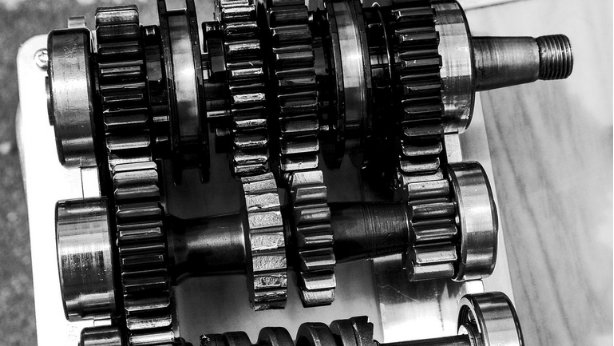
Gear ratios act as force multipliers. Lower gears multiply engine torque more aggressively, delivering stronger acceleration at low speeds. Higher gears reduce engine speed for efficiency and noise control.
A vehicle with modest horsepower but short, well-chosen gear ratios can accelerate more quickly than a higher-powered car with tall gearing. The engine may produce less power, but the drivetrain delivers more force to the wheels when it matters.
First and Second Gears Shape Perceived Performance
Initial acceleration heavily influences how fast a car feels. Vehicles with short first and second gears:
- Launch more decisively
- Respond immediately to throttle input
- Feel energetic in urban driving
Older performance cars often used long gearing to reduce wheelspin and noise. Modern vehicles, aided by traction control and sophisticated transmissions, can use shorter gears without compromising drivability.
Modern Transmissions Exploit Narrow Powerbands
Turbocharged engines often have narrow optimal operating ranges. Modern multi-speed transmissions keep engines within these ranges by:
- Using more gears
- Reducing rpm drops between shifts
- Selecting gears proactively
An eight- or ten-speed transmission ensures the engine is almost always operating near peak torque, compensating for lower peak horsepower.
Final Drive Ratios Are Often Overlooked
The final drive ratio multiplies torque across all gears. A shorter final drive:
- Increases acceleration in every gear
- Raises engine speed at cruising speeds
Manufacturers choose final drive ratios based on:
- Target fuel economy
- Noise regulations
- Market expectations
Performance-oriented vehicles often use shorter final drives, sacrificing some efficiency for responsiveness.
Real-World Acceleration vs Top-Speed Capability
Tall gearing benefits:
- High top speeds
- Fuel efficiency
- Low engine wear
Short gearing benefits:
- Overtaking performance
- Stop-and-go responsiveness
- Driving engagement
Most drivers spend far more time accelerating between 40 and 100 km/h than approaching top speed. Gearing optimized for this range feels faster regardless of horsepower.
Manual vs Automatic Gear Ratio Strategy
Manual transmissions typically use fewer gears, requiring compromises. Gear spacing must balance launch performance with highway cruising.
Automatics and dual-clutch transmissions:
- Use closer gear spacing
- Minimize power interruptions
- Adapt ratios based on driving mode
This allows modern cars to feel quicker than older manuals with similar or greater power output.
Why EVs Highlight the Importance of Gearing
Electric vehicles often use single-speed gearboxes, yet feel extremely quick due to:
- Instant torque delivery
- Fixed reduction ratios optimized for low-speed acceleration
This demonstrates that torque at the wheels—not horsepower at the crank—is what drivers perceive as speed.
Regulatory Pressure Influences Gearing
Emissions and noise regulations encourage taller gearing to reduce engine speed during standardized tests. This can make vehicles feel sluggish unless compensated by:
- Additional gears
- Turbocharging
- Software-assisted throttle mapping
Manufacturers must balance compliance with drivability.
Check This: MINI Countryman SE All4 Debuts in India with AWD and 440km Range
Why Spec Sheets Mislead
Two vehicles with identical horsepower can differ dramatically in real-world performance due to:
- Gear count
- Ratio spacing
- Final drive selection
- Shift strategy
Spec sheets rarely show this information, leading to misunderstandings about actual performance.
What Buyers Should Pay Attention To
To understand how a car will feel:
- Consider gear count and transmission type
- Look at torque curves, not just horsepower
- Note acceleration times in common speed ranges
Peak power numbers tell little about everyday usability.
Explore More: 2026 Yamaha YZF-R7 Unveiled with Advanced Features & Upgrades
Conclusion
Horsepower describes an engine’s maximum potential, but gear ratios determine how that potential is used. In real-world driving, where engines operate far from their power peaks, well-chosen gearing delivers faster, more responsive performance than raw horsepower alone. Modern vehicles feel quicker not because engines have become dramatically more powerful, but because transmissions are better at turning available power into usable acceleration.