Vehicle weight plays a decisive role in braking performance and crash safety, yet its impact is often misunderstood. As modern vehicles grow heavier due to increased size, safety equipment, and electrification, engineers face a complex challenge: improving occupant protection while managing the physical consequences of added mass. Understanding how weight influences braking distance and safety ratings is essential for interpreting modern vehicle performance claims.
The Physics of Braking and Mass
Braking performance is governed by basic physics. When a vehicle is moving, it possesses kinetic energy proportional to its mass and the square of its speed. To stop the vehicle, the braking system must dissipate this energy through friction at the brakes and tires.
As vehicle weight increases:
- Total kinetic energy increases
- More heat must be absorbed by brake components
- Greater force is required at the tire contact patch
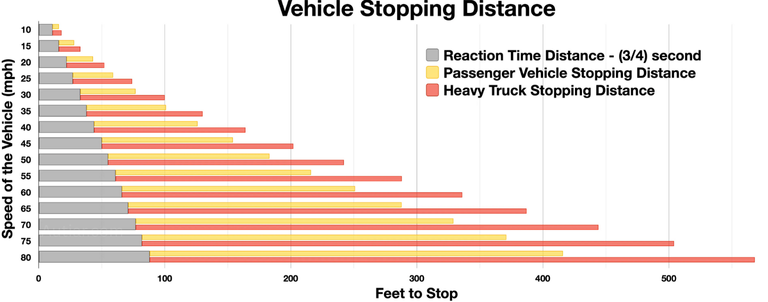
Even with identical braking systems, a heavier vehicle will generally require a longer distance to stop from the same speed.
Brake Hardware Scaling
Manufacturers compensate for increased weight by fitting:
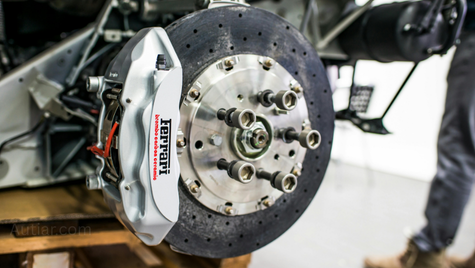
- Larger brake rotors
- Multi-piston calipers
- High-temperature brake materials
These upgrades improve stopping capability but also add weight, which partially offsets their benefit. Larger brakes also require larger wheels, increasing unsprung mass and affecting ride and handling.
Despite advanced brake hardware, tire grip ultimately limits braking performance. Once tire adhesion is exceeded, additional braking force provides no further reduction in stopping distance.

Tire Load and Grip Limitations
As weight increases, the load on each tire rises. While heavier loads can increase absolute grip, the relationship is not linear. Tires experience diminishing returns under high loads due to:
- Increased heat buildup
- Deformation of the tire structure
- Reduced friction efficiency
This is why heavier vehicles often show longer stopping distances despite powerful braking systems.
Repeated Braking and Fade
Weight also affects braking consistency. Heavier vehicles generate more heat during repeated stops, increasing the risk of brake fade. Even well-engineered brake systems must manage thermal limits, particularly in downhill driving or emergency braking scenarios.
Manufacturers address this with enhanced cooling ducts and thermal materials, but physics still imposes limits.
Weight and Crash Energy Management
In crash safety, vehicle mass plays a dual role. Heavier vehicles:
- Absorb more energy during a collision
- Tend to protect occupants better in single-vehicle impacts
This contributes to strong safety ratings in controlled crash tests. However, in multi-vehicle collisions, heavier vehicles transfer more energy to lighter vehicles, increasing injury risk for other road users.
Safety Ratings and Weight Bias
Crash safety ratings evaluate:
- Structural deformation
- Occupant deceleration forces
- Airbag and restraint effectiveness
These tests do not directly penalize vehicle mass. As a result, heavier vehicles can achieve high safety ratings while still posing greater risks in real-world traffic interactions.
This creates a perception that heavier vehicles are universally safer, which is not entirely accurate.
Electric Vehicles and Mass
Electric vehicles introduce new weight challenges due to large battery packs. EVs often weigh several hundred kilograms more than equivalent internal combustion vehicles.
Engineers mitigate this through:
- Low battery placement to reduce center of gravity
- Rigid battery enclosures that enhance structural integrity
- Advanced stability and braking control systems
Despite these measures, EVs typically exhibit longer braking distances than lighter vehicles in comparable classes.
Check This: MINI Countryman SE All4 Debuts in India with AWD and 440km Range
Regulatory and Design Trade-Offs
Modern regulations emphasize crash survivability, leading to stronger structures and more safety equipment. Each added system increases weight, creating a cycle where safety improvements contribute to braking challenges.
Manufacturers increasingly focus on:
- Weight reduction through material science
- Optimized structural load paths
- Integrated safety systems
The goal is to maintain protection while minimizing mass growth.
What Buyers Should Understand
A higher safety rating does not automatically mean shorter stopping distances. Buyers should consider:
- Independent braking test results
- Tire specifications
- Vehicle weight relative to its class
Lighter vehicles with well-designed braking systems can often stop more quickly than heavier vehicles with higher safety ratings.
Explore More: 2026 Yamaha YZF-R7 Unveiled with Advanced Features & Upgrades
Conclusion
Vehicle weight improves crash protection but negatively impacts braking performance. Modern automotive safety engineering is about managing this balance rather than maximizing mass. As vehicles continue to grow heavier, particularly with electrification, braking efficiency and weight control will remain central to both safety performance and real-world driving outcomes.