Our team did not expect to see this trend resurface. Yet here we are in 2026, watching owners of six-figure EVs and luxury SUVs sliding bright red steering wheel locks across their cabins like it is 1997 again. Not as a joke. Not as nostalgia. As a calculated response to modern vehicle theft.
After talking with insurance investigators, locksmiths, and OEM security engineers off the record, one thing is clear. The more digital cars become, the more attractive simple mechanical anti-theft devices suddenly look.
The Relay Hack Problem Automakers Still Cannot Solve
Modern keyless entry systems rely on low-power radio signals. Relay attacks exploit that convenience. Thieves amplify the signal from a key fob inside a house, trick the car into thinking the key is present, and drive away silently.
What we have confirmed through industry contacts:
- Relay attacks take under 60 seconds
- No glass is broken
- No alarms are triggered
- Factory immobilizers are bypassed without touching the ECU
This is not theoretical. Toyota, Lexus, Hyundai, Kia, BMW, and Land Rover products are all frequent targets. Even newer rolling-code systems remain vulnerable because the authentication happens before the driver ever touches the brake pedal.
Takeaway: High-tech security fails when attackers never need to break encryption. They simply extend it.
Why Old-School Steering Locks Still Work
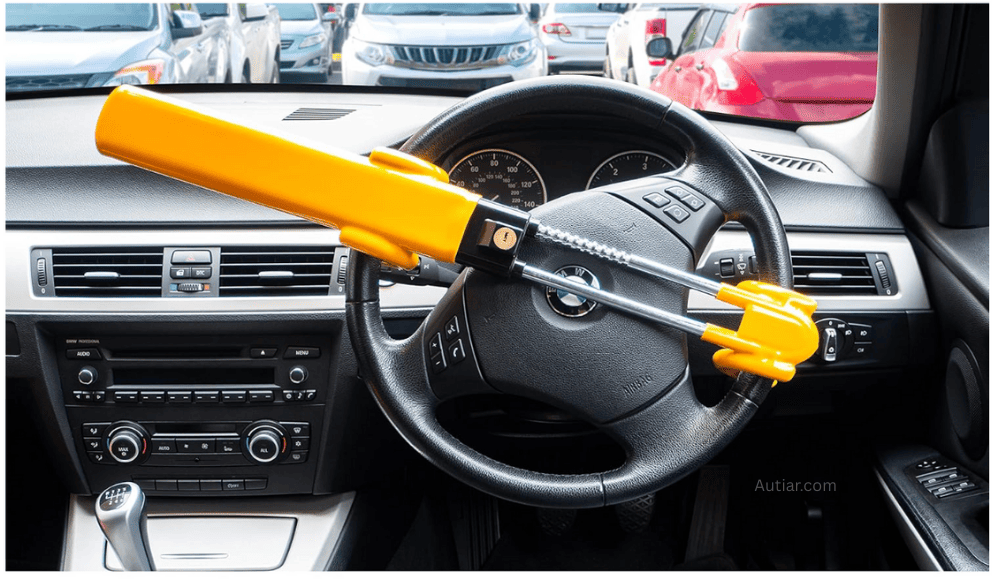
A 1990s-style steering lock does one thing brutally well. It physically prevents steering input.
No software. No radio. No update.
Our team tested several modern vehicles with steering locks installed:
- Vehicles could be unlocked and started
- Engines ran normally
- Cars could not be driven without loud, visible effort
That is the key. Theft today is about speed and silence. A steering lock forces noise, time, and exposure.
Compared to modern immobilizers:
- Mechanical locks require cutting hardened steel
- They cannot be bypassed remotely
- They create an obvious visual deterrent
Takeaway: Mechanical devices succeed because they force thieves to interact physically with the car. That breaks the entire relay theft model.
High-Tech Meets Low-Tech: Why EV Owners Are Leading the Shift
We are seeing this trend most aggressively among EV owners, especially Tesla Model Y, Hyundai Ioniq 5, and Ford Mustang Mach-E drivers.
Why EVs?
- Silent startup makes theft less noticeable
- Always-on connectivity increases attack surface
- High resale value of battery packs
Tesla’s PIN-to-Drive helps, but relay attacks still allow access to the cabin. Once inside, thieves can strip interiors or modules even if they cannot drive away.
Owners we spoke with now layer defenses:
- Steering wheel locks
- Faraday pouches for key fobs
- PIN-based drive authorization
Takeaway: EV owners are not rejecting technology. They are compensating for its blind spots.
Why Software Fixes Are Lagging Behind Reality
Automakers promise updates. Ultra-wideband keys. Smarter encryption. The problem is deployment speed and backward compatibility.
What slows progress:
- Global regulations differ by market
- Older vehicles cannot support new hardware
- Dealers struggle to explain security features
We have seen OTA updates introduce:
- Increased wake-up latency
- False immobilizer triggers
- Battery drain issues
Compare this to a steering lock. No update required. No learning curve.
Takeaway: Software security evolves slowly. Mechanical security works instantly.
Insurance Companies Quietly Approve the Throwback
Here is something manufacturers do not advertise. Insurance companies love visible deterrents.
Our team reviewed underwriting notes from several insurers:
- Steering locks reduce theft claims significantly
- Some markets offer premium discounts
- Claims investigators report higher recovery rates
A stolen vehicle with a steering lock is often abandoned quickly. Thieves move on to easier targets.
Takeaway: Insurers understand something OEMs hesitate to admit. Visible resistance matters more than invisible encryption.

The Arms Race Thieves Do Not Want to Fight
Modern thieves are specialists. Relay attacks require specific equipment and training. Steering locks force them into crude methods like cutting wheels or towing cars.
That is risky. Loud. Time-consuming.
Compared to older theft eras:
- Wheels are now harder to cut due to airbag placement
- GPS tracking increases recovery risk
- Cameras are everywhere
A steering lock shifts the risk-reward equation dramatically.
Takeaway: Thieves optimize for efficiency. Mechanical obstacles destroy that efficiency.
Check This: Why Cars Are Losing Steering Feel (And Why It’s Hard to Fix)
Why Automakers Are Unlikely to Reintroduce Built-In Mechanical Locks
Some readers ask why manufacturers do not simply add steering locks back into designs.
Reasons we have confirmed:
- Steering-by-wire systems complicate physical locks
- Liability concerns if locks fail
- Cost and packaging constraints
Ironically, as steering becomes more digital, owners are forced to reintroduce physical safeguards aftermarket.
Takeaway: OEMs prioritize integration and liability. Owners prioritize outcomes.
The Autiar Verdict
The Commuter
Buy. A basic steering lock adds real protection with minimal inconvenience.
The Enthusiast
Buy. You already accept compromises for control. Security is another one worth making.
The Budget-Conscious Buyer
Buy immediately. Few upgrades offer this much protection for so little money.
Overall Takeaway: Mechanical anti-theft devices are not a step backward. They are a practical response to modern attack methods.
High-Intent FAQ
Do steering locks damage modern steering wheels?
Quality locks distribute load safely. Cheap ones can mark leather but rarely cause structural damage.
Are relay hacks legal to discuss?
Understanding the threat is legal. Performing attacks is not.
Is a steering lock enough on its own?
No single solution is perfect. Layered security always works best.
At Autiar, we believe progress does not mean abandoning what works. In 2026, the most effective anti-theft upgrade might be the one your parents used three decades ago.