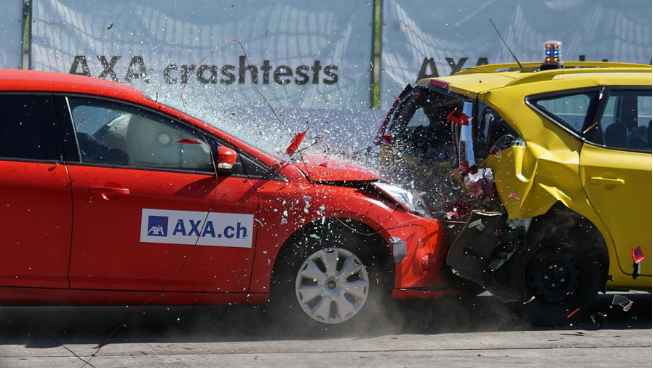
At Autiar, we don’t question the value of safety. We’ve all walked away from cars impressed by how modern crash structures and airbags do their job. But after years of testing, teardown discussions, and long conversations with chassis and software engineers, our team has reached an uncomfortable conclusion: the industry’s obsession with higher safety ratings comes with real, often unspoken trade-offs.
Five-star ratings sell cars. They also quietly reshape how cars drive, age, and cost their owners, often in ways no window sticker will ever admit.
When Crash Scores Start Designing the Car
Modern safety ratings, Euro NCAP, IIHS, NHTSA, no longer focus only on crash survival. They now heavily reward active safety systems, driver monitoring, and collision avoidance tech.
That shift has consequences.
To score well, manufacturers engineer vehicles around:
- Specific impact angles and speeds
- Rigid sensor mounting zones
- Predictable deformation paths, even if they add mass
We’ve seen this firsthand comparing a 2015 Honda Accord to a 2024 Accord. The newer car is objectively safer in standardized tests, but it’s also heavier, wider, and less communicative at the limit.
Takeaway: Safety ratings don’t just measure cars anymore, they dictate how they’re built, often prioritizing test performance over holistic balance.
Weight Gain: Safety’s Quiet Companion
One of the least discussed costs of safety chasing is mass. Advanced high-strength steel, additional crossmembers, larger crumple zones, and multiple radar housings all add up.
Our team tracked curb weight increases across segments:
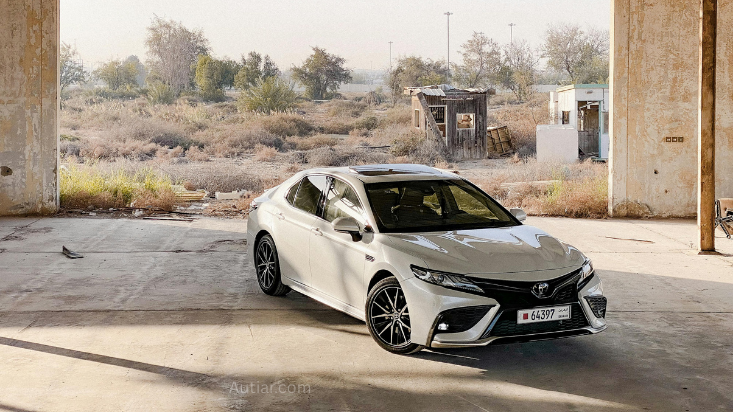
- Toyota Camry: up ~220 lbs since 2010
- BMW 3 Series: up ~300 lbs since E90 generation
- Honda Civic: now heavier than an early-2000s Accord
More weight affects:
- Braking distances in real-world conditions
- Tire wear rates
- Suspension tuning compromises
Engineers fight this with stiffer springs and damping. That’s why many modern cars feel firm over small bumps but oddly detached in corners.
Takeaway: Chasing safety ratings often makes cars heavier, and that weight ripples through every dynamic system.
The Sensor Tax: Complexity That Owners Pay For
Modern safety scores reward redundancy. That means cars now carry:
- Forward radar
- Side radar
- Multiple cameras
- Ultrasonic sensors
- Driver-monitoring cameras
Each sensor needs:
- Calibration
- Heating elements
- Software integration
- Replacement precision
We’ve spoken with body shop managers who now dread minor front-end repairs. A simple bumper replacement on a late-model Mazda CX-5 or Subaru Outback can require thousands in recalibration costs.
Compare that to older models where a bumper was just plastic and paint.
Takeaway: Higher safety ratings quietly increase ownership costs, especially after minor accidents that would’ve been cheap fixes a decade ago.
Software Safety vs. Driver Confidence
Advanced driver assistance systems (ADAS) are now central to safety scores. Lane-keeping, emergency braking, and cross-traffic alerts all earn points.
But our team has logged thousands of miles where these systems:
- Intervene late or inconsistently
- Overcorrect steering on poor road markings
- Trigger false braking events
Compare Toyota Safety Sense to Hyundai SmartSense. Toyota’s systems intervene more conservatively, while Hyundai’s react faster, but sometimes too aggressively.
In real-world driving, that leads to:
- Driver hesitation
- Reduced trust in vehicle responses
- Overreliance or complete disablement of systems
Takeaway: Safety tech that drivers don’t trust becomes safety tech that drivers turn off, and ratings don’t measure that.
Steering Feel and Brake Pedals: Casualties of Safety Tuning
Here’s a truth enthusiasts already know: modern safety systems interfere with natural control feedback.
To support stability control and collision avoidance, steering systems must:
- Allow torque overlays
- Mask certain road feedback
- Prioritize predictability over nuance
Brake systems suffer too. Brake-by-wire setups enable automatic emergency braking, but often result in:
- Inconsistent pedal feel
- Artificial initial bite
- Reduced modulation at the limit
We compared a 2010 Mazda 6 to a 2023 Mazda 6 (global market). Despite Mazda’s best efforts, the newer car’s steering and brake feel are inevitably filtered by safety integration.
Takeaway: The more a car must be ready to take control from you, the less honest its controls can be.
Check This: Why Cars Are Losing Steering Feel (And Why It’s Hard to Fix)
Repairability and Insurance: The Long-Term Fallout
Higher safety ratings also influence insurance costs, but not always downward.
While crash avoidance tech can reduce accident frequency, repair severity often increases. We’ve seen:
- Higher average claim costs
- More total-loss declarations from minor impacts
- Insurance premiums climbing year over year
Vehicles like the Tesla Model Y and Volvo XC60 score brilliantly in safety tests, but insurers price in sensor density and repair complexity.
Takeaway: Safer cars don’t automatically mean cheaper ownership. In many cases, the opposite is true.
The Autiar Verdict
The Commuter
Buy. High safety ratings make sense if you value assistance systems and predictable behavior.
The Enthusiast
Wait. Seek models that balance safety tech with driver engagement, or consider lightly used pre-ADAS-heavy generations.
The Budget-Conscious Buyer
Skip chasing five stars. A four-star car with simpler systems often costs less to insure and repair.
Overall Takeaway: Safety ratings matter, but chasing the highest score comes with hidden compromises buyers deserve to understand.
High-Intent FAQ
Do higher safety ratings always mean fewer accidents?
Not necessarily. They reduce severity, but driver behavior still matters more.
Can safety tech be recalibrated cheaply after repairs?
Rarely. Calibration requires specialized equipment and trained technicians.
Are older cars inherently unsafe?
No. Many older cars lack avoidance tech but still offer strong passive safety.
At Autiar, we believe safety should protect drivers, not quietly reshape cars into heavier, more complex machines without transparency. Understanding the hidden cost is the first step to making a smarter choice.