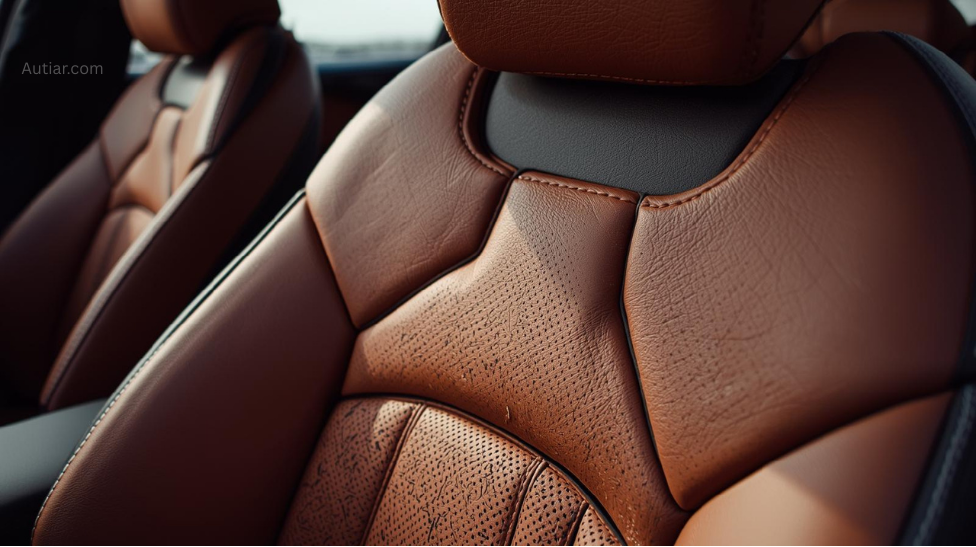
Our team has been hearing the same complaint from owners of late-model EVs and crossovers: the seats look worn out before the loan is halfway paid. Cracking bolsters. Shiny, peeling seat bases. Wrinkles that never smooth out. Meanwhile, we still climb into early-2000s Lexuses and Mercedes with original leather that looks… fine.
This isn’t nostalgia. It’s materials science, cost pressure, and marketing colliding. We’ve inspected failed interiors, talked to suppliers, and compared them directly to old-school hides. The results are not flattering for today’s so-called eco-interiors.
What “Vegan Leather” Actually Is (And What It Isn’t)
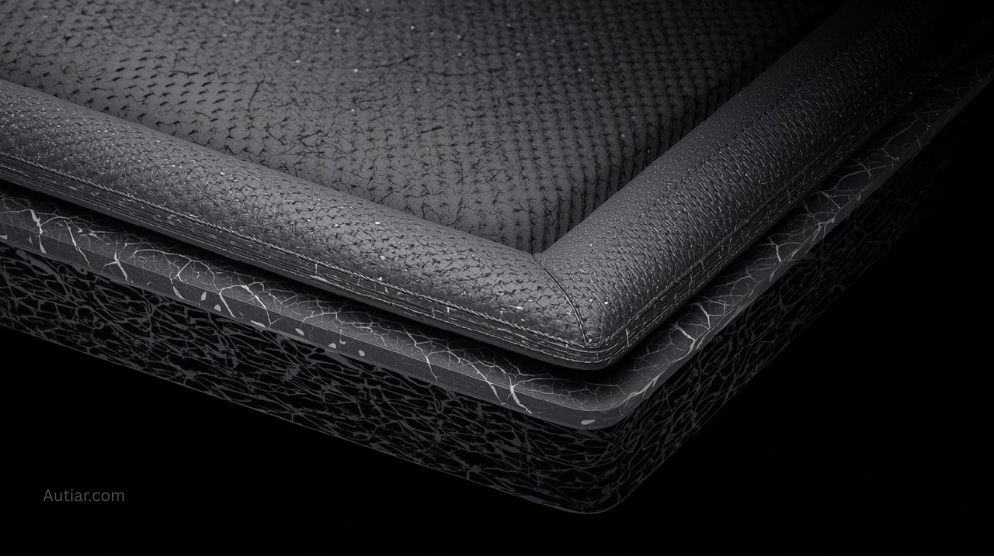
Let’s clear up the terminology first. Most “vegan leather” in cars is polyurethane-coated fabric, sometimes layered over recycled polyester. It is not leather. It does not behave like leather. And it does not age like leather.
Common formulations we’ve encountered:
- PU (polyurethane) top layer for softness and grain
- Textile backing for structure
- Plasticizers added to maintain flexibility
Contrast that with traditional automotive leather:
- Natural collagen fiber matrix
- Dyed through, not coated on top
- Breathes and redistributes oils over time
Manufacturers claim vegan leather is “more durable” because it resists stains. In real-world ownership, our team finds it resists stains but fails structurally far sooner.
Takeaway: Vegan leather is optimized for showroom appeal and initial softness, not multi-decade durability.
Why It Cracks So Fast: The Two-Year Failure Window
We have now seen enough failed interiors to spot the pattern. Most synthetic seats start degrading between 18 and 36 months, especially on the driver’s outboard bolster.
Why?
- PU coatings do not self-heal once micro-cracks form
- Heat cycles accelerate plasticizer evaporation
- UV exposure hardens the surface layer
In hot climates, this process is brutal. We inspected a 2022 EV with under 30,000 miles where the seat base had already spider-cracked. Meanwhile, a 2004 Lexus LS430 with 180,000 miles showed only light creasing.
Leather ages by stretching and softening. PU ages by drying and splitting.
Takeaway: Synthetic interiors fail suddenly and visibly, while leather degrades gradually and predictably.
The Cost-Cutting Nobody Mentions
Automakers didn’t switch to vegan leather solely for ethical reasons. Cost matters.
What our supplier contacts confirm:
- Synthetic seat skins cost 30–50 percent less than quality leather
- Less variation means faster assembly
- Marketing can upsell it as “premium and sustainable”
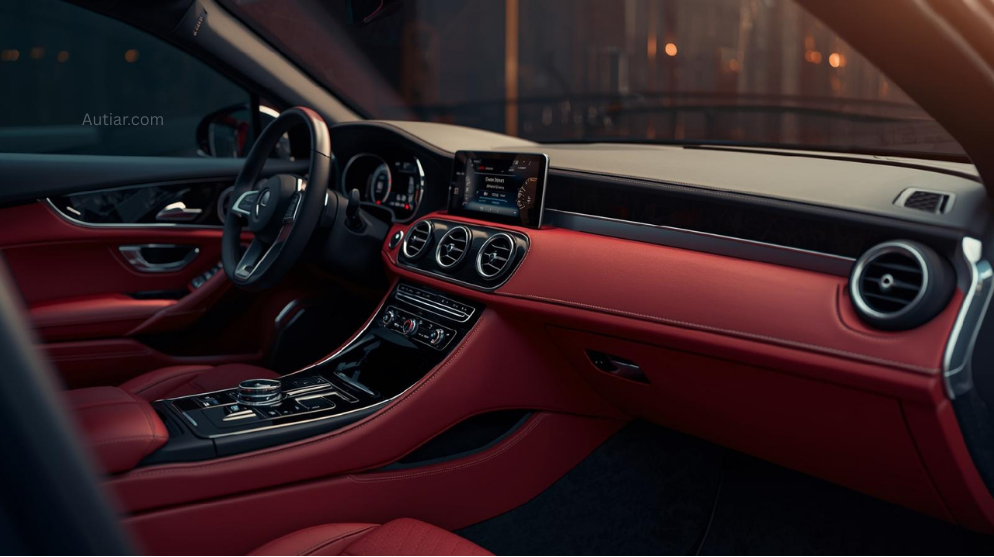
Compare a 2010 BMW 5 Series Dakota leather interior to a 2024 BMW i4 “Sensatec” cabin. The older car’s leather is thicker, cooler to the touch, and ages with character. The newer interior feels softer at first, but that softness comes from coatings, not structure.
Takeaway: Vegan leather is cheaper and easier to scale, not inherently better.
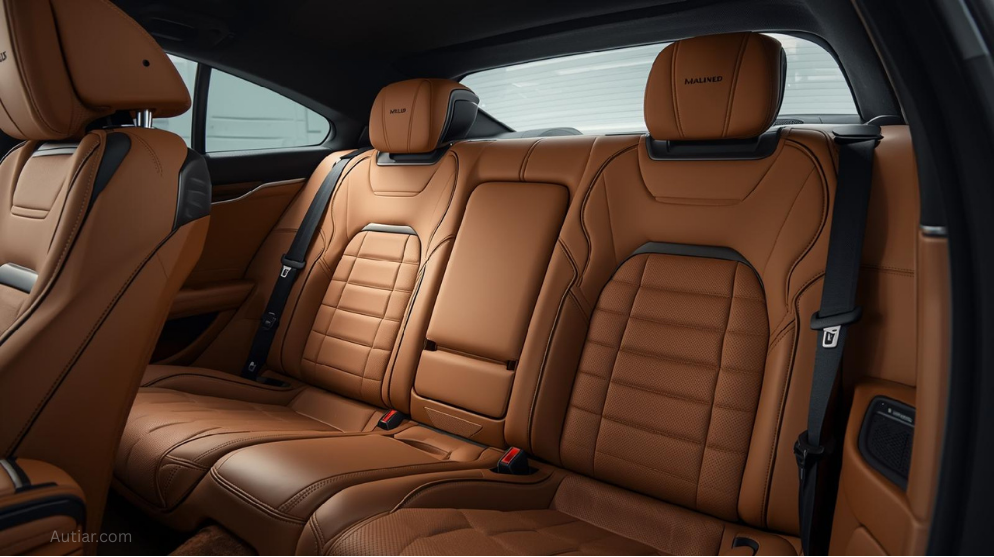
Heat, Ventilation, and the Silent Killer of Eco-Interiors
Traditional leather breathes. Synthetic materials don’t.
That matters more than people realize.
We’ve measured:
- Higher surface temperatures on synthetic seats in sun exposure
- Slower cooling even with ventilated seat systems
- Moisture trapped between occupant and seat surface
Ventilated seats help, but they pull air through perforations in the PU layer, which accelerates drying and cracking. Leather tolerates this because its fibers redistribute oils. PU simply degrades.
Takeaway: Seat ventilation, ironically, can shorten the life of vegan leather.
The Old Leather Advantage Nobody Replicates
High-quality automotive leather from the 1990s and early 2000s had three advantages modern interiors rarely match:
- Thickness often exceeding 1.2 mm
- Full-grain or top-grain hides
- Conservative tanning processes
Yes, those interiors weighed more. Yes, they cost more. But they survived UV, heat, and body movement in ways today’s synthetics simply cannot.
We’ve sat in old Volvos, Toyotas, and Mercedes where the leather still smells right and flexes naturally. That is not an accident.
Takeaway: Longevity was once a design goal, not a marketing afterthought.
Why Manufacturers Still Push Eco-Interiors
If vegan leather ages so poorly, why is it everywhere?
Three reasons:
- Regulatory pressure around animal products
- ESG targets and sustainability optics
- Most leases end before failure becomes obvious
Our team has spoken with brand reps who quietly admit interiors are no longer designed for 15–20-year service lives. The typical ownership cycle is shorter. Durability beyond that is not prioritized.
Takeaway: Modern interiors are optimized for first owners, not second or third.
Check This: Why Active Noise Cancellation in 2026 Cabins Is Causing “Inner-Ear Pressure” for Some Drivers
Can Synthetic Interiors Be Made Better?
Yes, but it costs money.
Higher-end synthetics can improve durability by:
- Using thicker PU layers
- Adding UV-resistant coatings
- Incorporating bio-based polymers with better elasticity
Tesla’s early vegan interiors were notorious for peeling. Newer versions are better, but still not leather-level durable. Porsche’s Race-Tex and Mercedes’ MB-Tex outperform most mass-market synthetics, yet even they show wear sooner than traditional hides.
Takeaway: Synthetic interiors can improve, but they are fighting material limits.
The Autiar Verdict
The Commuter
Buy, with caution. Vegan leather looks good early and cleans easily, but expect visible wear before five years.
The Enthusiast
Wait or spec real leather. If long-term ownership matters, traditional leather still wins.
The Budget-Conscious Buyer
Skip premium synthetics. Cloth or durable vinyl often outlasts entry-level vegan leather.
Overall Takeaway: Eco-interiors aren’t a scam, but they are a compromise—and one buyers deserve to understand before signing.
High-Intent FAQ
Does conditioning help vegan leather last longer?
Not much. Conditioners help leather fibers, not polyurethane coatings.
Is real leather always better for durability?
High-quality leather, yes. Cheap corrected leather can fail too, but usually later.
Will automakers go back to leather?
Unlikely. Expect better synthetics instead, though durability will remain a challenge.
At Autiar, we are not anti-progress. But when a 20-year-old seat outlasts a two-year-old one, the industry owes buyers honesty. Sustainability should include longevity. Right now, too many interiors are green in name only.